
Finds shadow AI and personal accounts
Discovery starts from traffic and identity, not from a procurement export, so it surfaces the AI applications, personal accounts and unreviewed agents nobody asked permission to use.
Discover
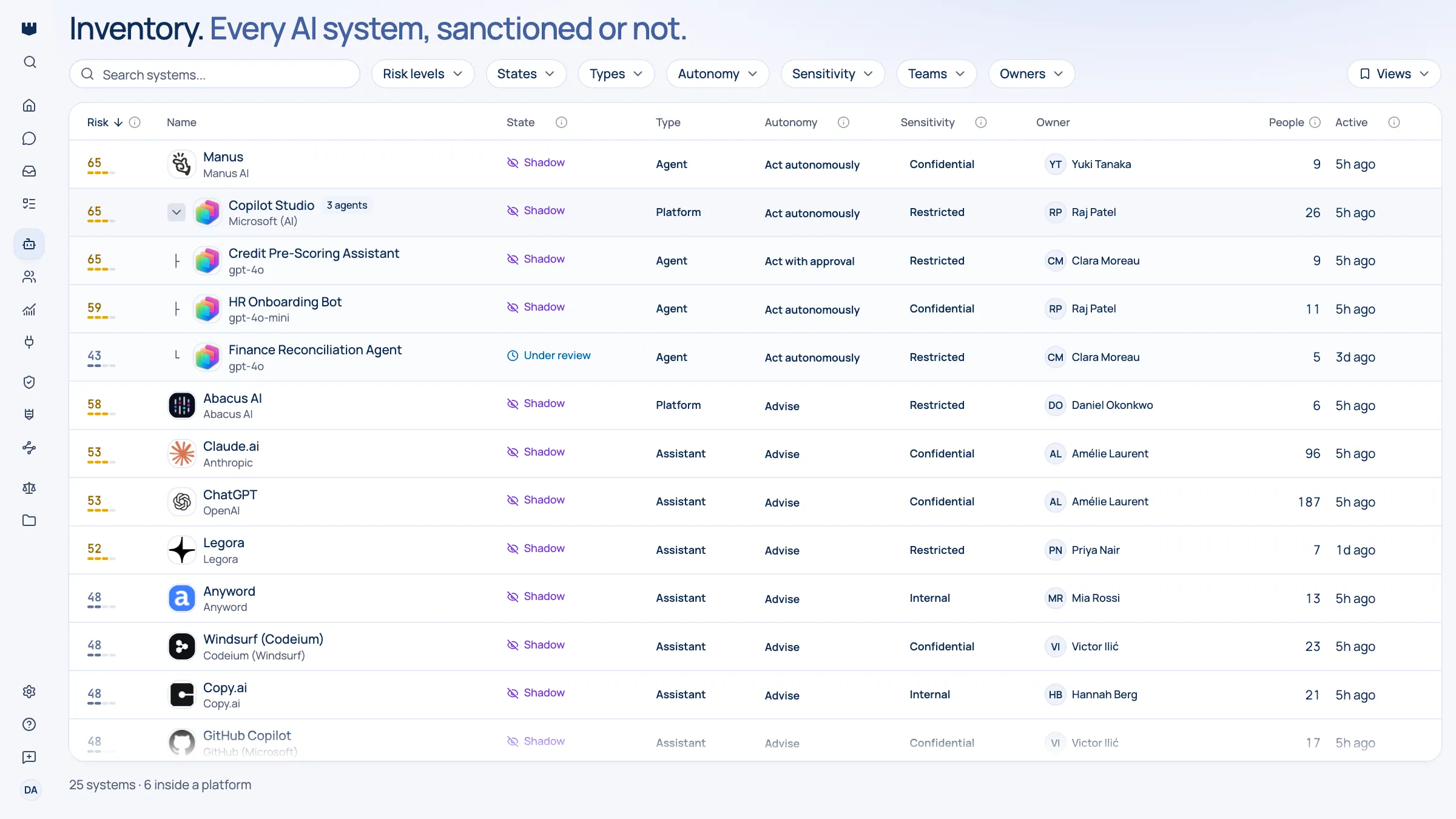
Qastel finds the AI tools, agents and model endpoints your teams actually use, from the systems you already run, and keeps them in one live inventory.
A free tier, a work email and a browser tab are all it takes to start using an AI tool. Qastel spots it from the signals your estate already produces, so you can govern it like the rest.
Sign-ins, network logs, agent platforms and AI gateways reveal the tools no survey or procurement list contains.
On company devices, the browser extension and the desktop agent catch personal accounts and AI desktop apps.
One identity per person, with every account they use, including personal accounts on shadow AI.
Shadow AI discovery
Every new AI system starts as shadow AI until someone reviews it. Qastel names the tool, rates its risk and shows who uses it, so you can decide what to do with it.
People and usage
The People directory resolves everyone seen using AI to one identity and links the accounts they use: the work account in your directory, and the personal one they opened a chatbot with.
Inventory
Shadow AI is more than a chatbot in a browser tab. The inventory lists the agents your teams built, the AI apps installed on their machines and the model APIs their code calls, each with its risk and its users.
The Qastel difference
Discovery starts from traffic and identity, not from a procurement export, so it surfaces the AI applications, personal accounts and unreviewed agents nobody asked permission to use.
On top of the live inventory, generate a report or export the inventory at any time, so the picture you share is always the current one.
New AI systems, personal accounts in use and sensitive data in prompts land in your Inbox as they are found. A Guardian can review that activity and propose what to do next.
No. Qastel reads from systems you already operate: your identity provider, your network and web-security tooling, the agent platforms your teams build on, your AI providers' admin data and your AI gateway. The optional client-side components are a browser extension for managed browsers and a Windows desktop agent, deployed by policy when you want visibility inside the session or the device.
Those products inventory applications. Qastel inventories AI systems: the models, agents, copilots and endpoints behind those applications, together with the identities that reach them, the data sensitivity involved and their EU AI Act risk classification. A CASB is a useful signal source, and Qastel treats it as one input among several.
Yes. On managed browsers the Qastel extension sees which account is signed in to an AI tool, and flags a personal account, or a personal plan used with a work email. The Usage page charts work and personal use week by week, and Control policies can be scoped to personal accounts.
In the EU. Qastel is built and hosted in Europe, and customer data is stored and processed in Paris. The full subprocessor list and our DPA are published in the Trust Center.
Get a 30-minute overview of how Qastel discovers, assesses and controls the AI used across a business.