
See why a system is risky
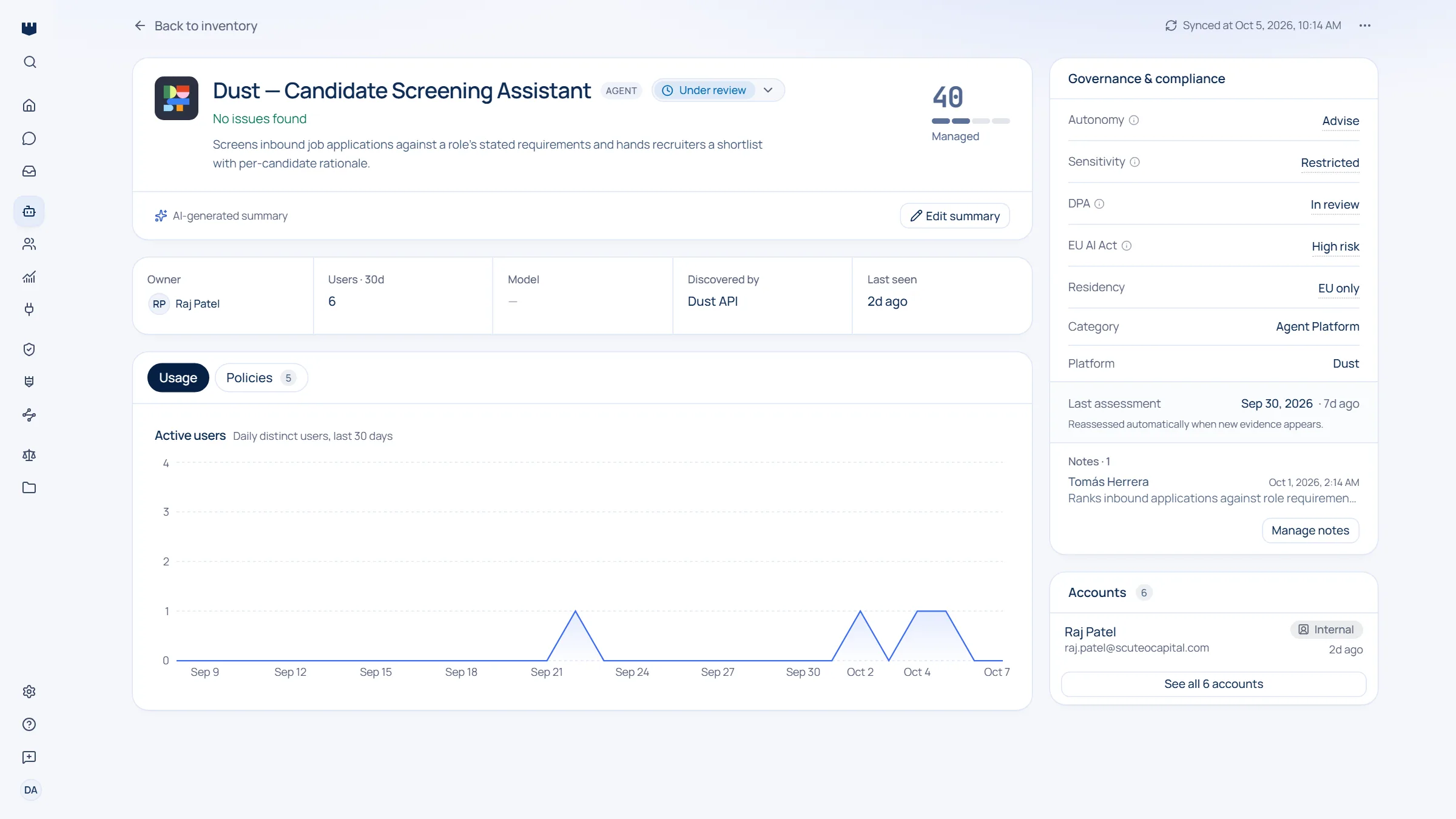
Each score is broken down into eight factors, such as data sensitivity, autonomy and EU AI Act tier, so you can see exactly what drives it.
Assess
Qastel classifies and scores every AI system it finds, shows what it is used for and by which teams, and lets you review the results and act on them in Qastel Chat.
A risk review done once, when a tool is bought, is out of date within months. Qastel scores every AI system from what it sees in your estate, and again whenever something changes.
A risk score from 0 to 100 on eight dimensions, with the EU AI Act tier assessed automatically.
The score breaks down into the gaps behind it. An unknown counts as at risk, so a blank never lowers the score.
One governance score for the whole estate, and each open action shows the points it adds.
Risk classification
Each system gets a risk score built from eight weighted dimensions: governance state, autonomy, data sensitivity, EU AI Act tier, policy coverage, data residency, DPA status and personal-account use.
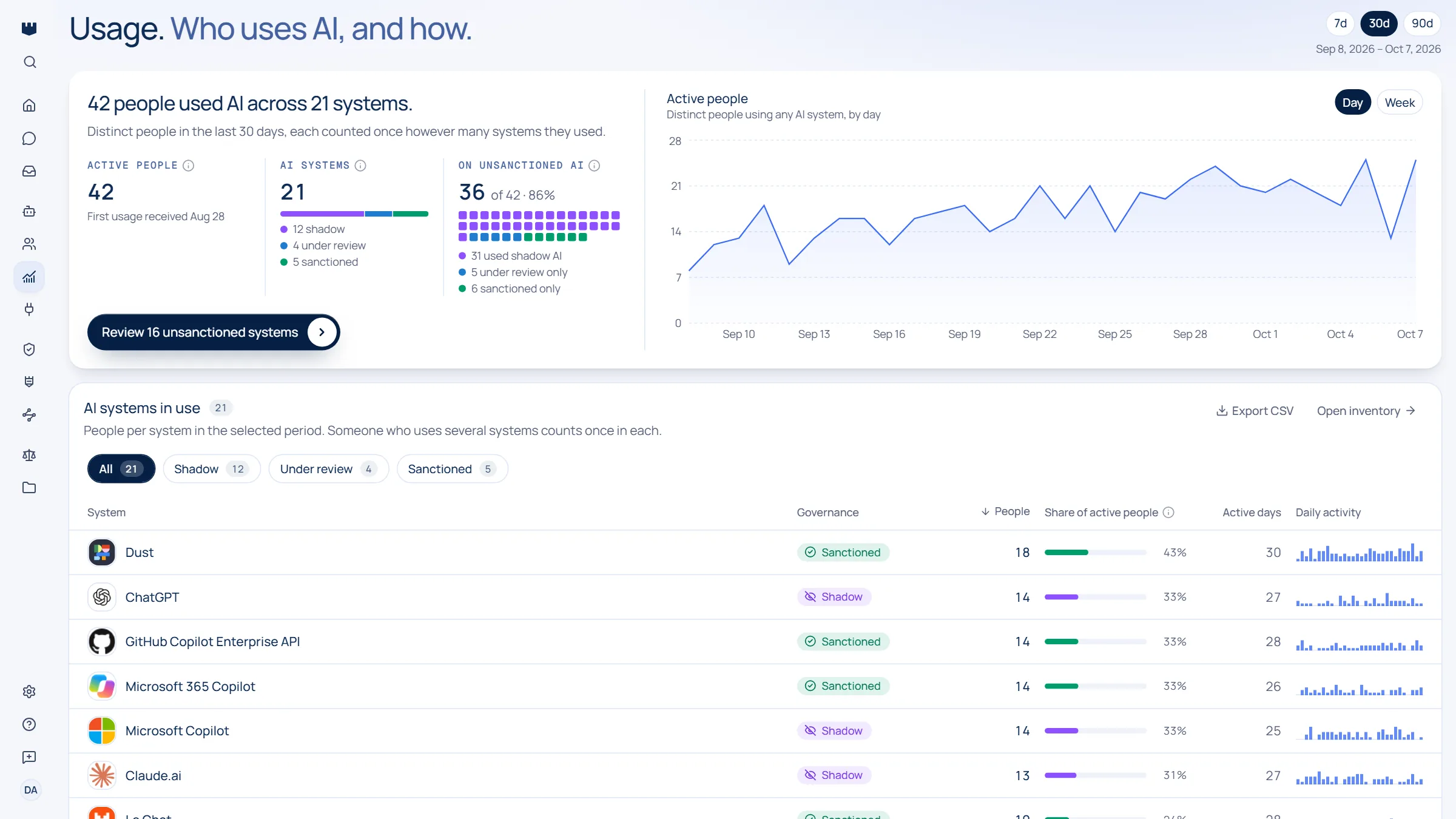
Usage
Qastel groups AI use by business topic, such as HR, Finance, Legal, Sales or software engineering, and flags the sensitive data sent along the way. The People directory shows that use team by team, down to the personal accounts.
Qastel Chat
Ask Qastel Chat about your AI estate in plain language: which systems are risky, who uses them, what to fix first. When a change is needed, such as assigning an owner, marking a system as sanctioned or drafting a policy, Chat prepares it and applies it once you approve.
The Qastel difference
Each score is broken down into eight factors, such as data sensitivity, autonomy and EU AI Act tier, so you can see exactly what drives it.
Ask about your AI usage in plain language, then handle what you find in the same conversation: assign an owner, change a system's status or draft a policy, each applied once you approve.
A new system or a new gap becomes an action in your Inbox, showing the points it is worth. A Guardian can review your AI activity and propose the policies that close it, for you to approve.
From explicit rules applied to what Qastel knows about each system, across eight weighted dimensions. Nothing is a black box: the score breaks down into every gap that produced it, the evidence behind each one and exactly how much it cost.
The risk score belongs to one AI system: lower is better, and it says how risky that system is. The governance score belongs to the whole estate: higher is better, and it says how much of the estate is reviewed, owned and covered by policy. Closing the actions it lists is how you raise it.
No questionnaire is required to get a first result: assessment starts from what discovery already found. Owners can add context such as purpose, data categories and DPA references, and that context refines the score, but an unanswered system is still assessed rather than left blank.
Chat can propose an owner, a governance state or a classification for an AI system, add a note, dismiss, snooze or reopen an action, and draft a policy. Each proposal is a card you approve or deny, and your permissions are checked again when you approve. A policy draft is always created disabled.
Get a 30-minute overview of how Qastel discovers, assesses and controls the AI used across a business.